
Your hearing
Hearing usually changes so slowly that we adjust without noticing — until conversations take work and favorite places get harder. This guide explains the signs, why it's worth acting early, and what getting help actually looks like.
“It's so important to stay connected.”
Tick anything that sounds like you — or like someone you live with. It isn't a test, just a way to take stock.
Nothing ticked yet.
22%
of adults aged 65–74 have disabling hearing loss
55%
of adults 75 and older have disabling hearing loss
30%
of adults 70+ who could benefit from hearing aids have ever used them — fewer than 1 in 3
Source: National Institute on Deafness and Other Communication Disorders (NIH), Quick Statistics About Hearing.
Hearing loss affects much more than the ears. The good news: most of it improves once you're hearing well again.
So often people tell me after they have their hearing aids,
“I wish I did this sooner.”
Conversations take effort
Filling in missed words all day is tiring. Many people notice they're worn out after a dinner out or a family visit.
Pulling back from people
When it's hard to follow along, it's natural to stop going to the places and groups you enjoy — which can lead to loneliness.
Strain on relationships
Misunderstandings, a loud TV and repeated "what?" can frustrate everyone — the person with hearing loss most of all.
Safety
Doorbells, smoke alarms, traffic and someone calling your name are all easier to miss.
Brain health
Research, including a large Johns Hopkins–led study, has linked untreated hearing loss with faster cognitive decline in older adults — and found that hearing care helped slow it in those at higher risk. It's one more reason not to wait.
- 01Notice the signsHearing usually changes slowly, so it's easy to adjust without realizing. The checklist above is a good start — and so is asking the people you live with.
- 02Get a hearing testA painless evaluation in a quiet room shows how you hear across different pitches and how clearly you understand speech. At Clarity it's free.About our free hearing test
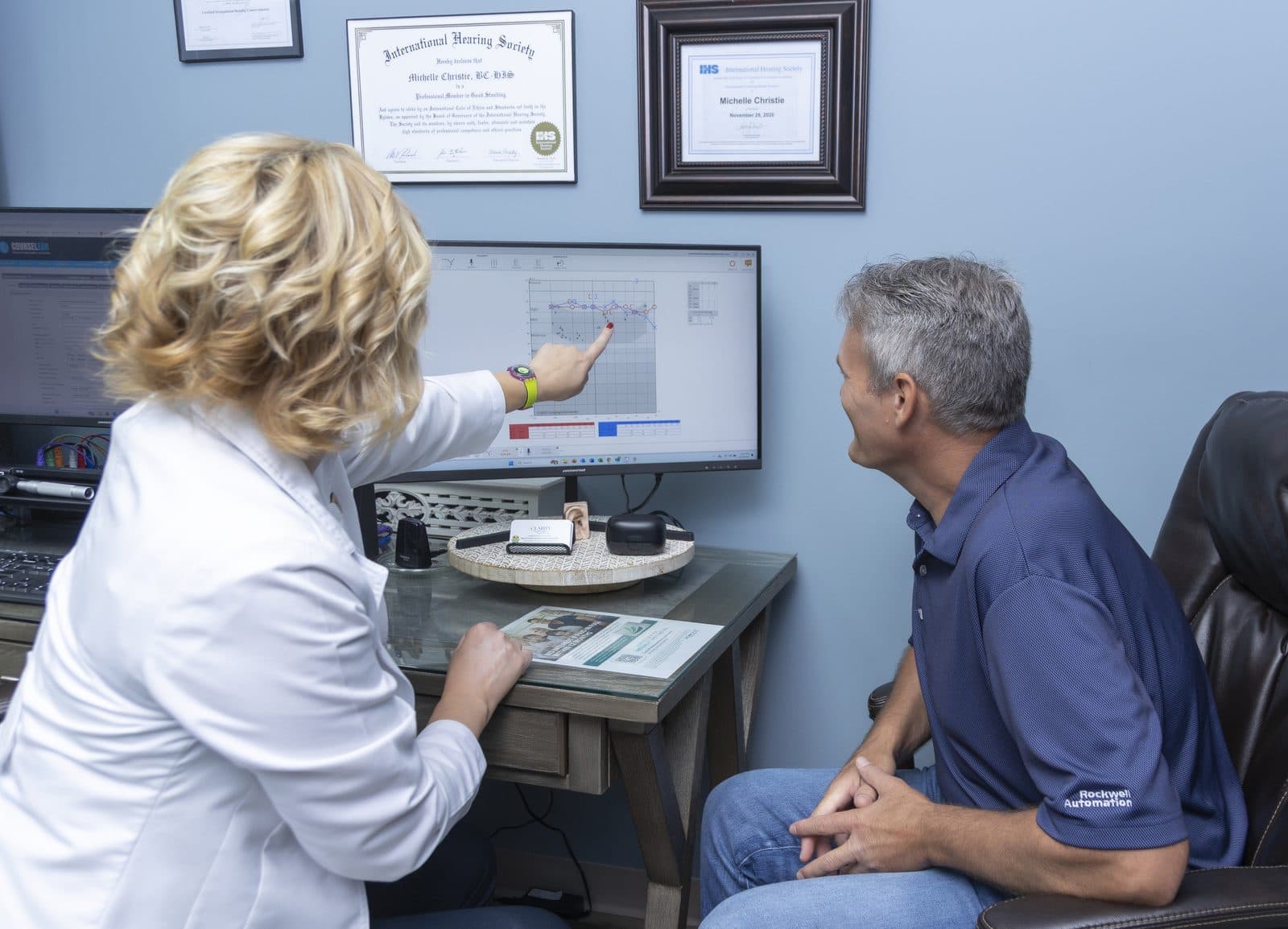
- 03Understand your resultsMichelle explains your results in plain language and tells you honestly whether hearing aids would help — or not.
- 04Try before you decideBecause we're independent, you can hear options from seven leading brands in our office, in real conversation.See the brands we fit
- 05Fitted, then fine-tunedYour hearing aids are programmed to your hearing, and follow-up visits fine-tune them as your brain gets used to hearing more again.About fittings
It's often family who notice first. Raising it kindly — and at the right moment — makes all the difference.
Helpful
- Pick a calm, private moment — not right after a missed conversation
- Talk about what you've both noticed, with specific, gentle examples
- Focus on what they'd enjoy again: grandchildren, church, dinners out, the TV at a normal volume
- Offer to come along to the hearing test
- Let them take the online hearing test first, in private, if that feels easier
Best avoided
- Don't raise it in front of others or when you're frustrated
- Don't label it — "you're going deaf" shuts the conversation down
- Don't keep repeating for them; it can hide how much they're missing
- Don't expect one conversation to settle it — give it time
Making conversation easier, starting today
- Face the person and get their attention before you speak
- Speak clearly and a little slower — no need to shout
- Turn down background noise, or move somewhere quieter
- If something isn't understood, say it a different way rather than louder
Family members are always welcome at appointments. See our first-visit checklist.